

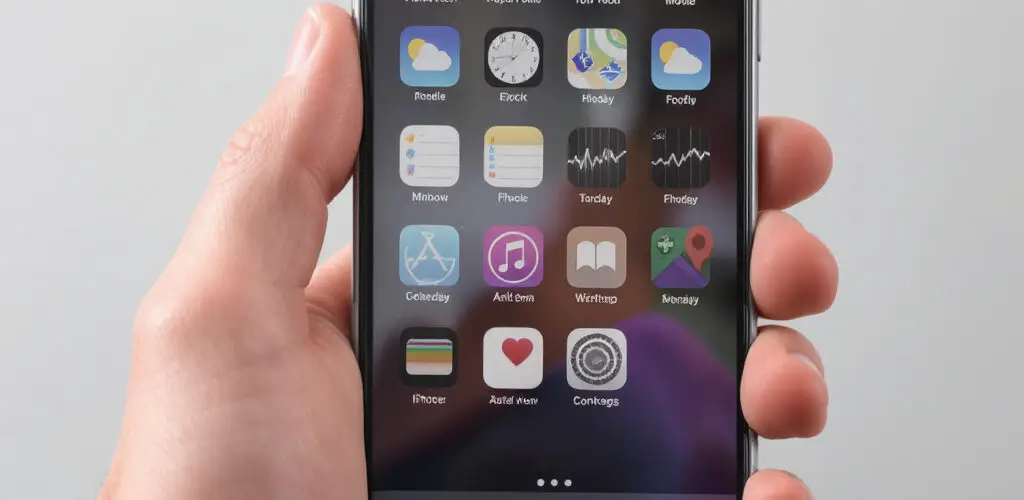
Hello and welcome to our very first lesson. Before we dive into learning how to use your phone, we need to answer an important question: Do you have an Android phone, or do you have an iPhone?
You might be thinking, “Aren’t they all just smartphones?” And yes, they are — but Android and iPhone are two different types of smartphones, and they work a little differently. This course is designed for Android phones, so it’s important to know for sure which one you have.
Don’t worry — by the end of this lesson, you’ll know exactly what kind of phone you own, and you’ll feel confident moving forward.
Why This Matters
Think of Android and iPhone like two different kinds of cars. Both will take you from point A to point B, but the buttons and controls are in different places. If you’re learning to drive a Toyota, but you actually own a Ford, you’ll end up confused.
That’s why we want to clear this up right away.
Step 1: Look at the Logo on Your Phone
The simplest way to tell is by checking for a logo:
- If you see a bitten apple on the back of your phone, congratulations — that’s an iPhone.
- If you don’t see an apple, you almost certainly have an Android phone.
Android phones are made by companies like Samsung, Motorola, LG, Google Pixel, and OnePlus. If your phone says one of those names anywhere on it, you have an Android.
Step 2: Look at the Buttons
Another quick check is the home button:
- iPhones used to have a round button at the bottom center of the screen (on older models). Newer iPhones don’t have that button at all — just one big screen.
- Android phones usually have three little buttons at the bottom of the screen: a triangle, a circle, and a square. These are your navigation buttons. Some newer Androids don’t have buttons, but instead use swipe gestures — but we’ll cover that later.
Step 3: Look at the Charging Cable
Take a look at the cable you use to charge your phone.
- iPhones always use a cable with a tiny, narrow plug called Lightning, or sometimes the newer USB-C cable (on the very latest models).
- Android phones almost always use USB-C or micro-USB plugs. They’re different from Apple’s Lightning cable.
If your charger looks unique and only works with Apple products, you’ve got an iPhone. If it looks more universal — like it can charge different devices — you’ve got an Android.
Step 4: Look at the Apps and Settings
Turn on your phone and look at the icons.
- On an iPhone, the settings app looks like gray gears and is simply called Settings.
- On an Android, the settings icon might look like gears too, but the layout of the home screen usually has Google apps front and center — like Gmail, Google Maps, or the Google Play Store.
The Google Play Store is a dead giveaway. If you see an app shaped like a colorful triangle called “Play Store,” you definitely have an Android.
Quick Action: Confirm Your Phone Type
Take your phone right now, flip it over, and look for the clues:
- Do you see an Apple logo? If yes, it’s an iPhone.
- If not, check the brand name. Samsung, Motorola, Google, LG? That’s Android.
- Still not sure? Look for the Play Store app on your home screen. If it’s there, you’re in the right place — this course is for you!
What If You Have an iPhone?
If you discover you have an iPhone, don’t worry — you didn’t waste your time. It’s simply that this particular course focuses only on Android phones. iPhones are wonderful devices, but they work differently, and mixing the two would only confuse things.
If you do have an iPhone, I recommend finding a senior-friendly iPhone basics course instead. But if your phone is Android, you’re in the right spot, and we’re going to move forward step by step.
Reassurance
Now, if you’ve confirmed that you have an Android phone, take a deep breath and relax. You’ve already completed the very first step of your journey. That might not feel like much, but think about it — just a few minutes ago, you might not have been sure what kind of phone you had. Now you know for sure. That’s progress.
This is how this course is designed: each lesson gives you a small win, and those wins add up. By the time we finish, you’ll be confident using your phone every single day.
Wrap-Up & What’s Next
So, to recap:
- Apple logo = iPhone
- Samsung/Google/LG/Motorola = Android
- Play Store app = Android
- This course = Android only
Now that you know what phone you have, you’re ready to dive into the first real lesson.
In the next lesson, we’ll start with the very basics — how to turn your phone on and off, how to charge it, and how to find your way around the home screen.
Congratulations — you’ve taken the very first step toward becoming confident with your smartphone.
I’ll see you in Module 1, Lesson 1: Powering On, Charging, and Navigating the Home Screen.